
Spaced Repetition
Stuon’s spaced repetition view is built for one of the most effective study methods for long-term memory. Instead of cramming everything once and forgetting most of it a few days later, spaced repetition helps you return to the right material at the right time, so revision stays lighter, recall gets faster, and your study sessions compound instead of resetting.
How spaced repetition helps you study smarter, not just longer
Spaced repetition is a study technique built around timing. The idea is simple: instead of reviewing information randomly or only when panic sets in, you revisit concepts right before you are likely to forget them. That small shift changes everything. Revision becomes more strategic, memory becomes more durable, and the hours you spend studying start to produce better retention instead of temporary familiarity.
In practice, this matters most for subjects that need long-term recall. Language learning, medicine, law, biology, history, and exam-heavy courses all reward repeated retrieval over passive rereading. If your usual pattern is “I knew this yesterday, but now it feels blurry,” spaced repetition is one of the clearest fixes. It lowers forgetting by turning review into a system instead of a last-minute reaction.
Stuon’s approach keeps that system readable. You can quickly see what needs review, what is still fresh, and what material is starting to drift. That means less guessing, less wasted revision, and a clearer path through large amounts of content.
See spaced repetition in motion
This walkthrough shows how the spaced repetition area works in practice. Instead of treating review like a vague reminder, it turns revision into a visible workflow where you can keep track of what is due, what needs reinforcement, and what knowledge is already holding up well.
That matters because one of the hardest parts of revision is not the idea itself. It is knowing where to begin. A clear review flow removes that friction and helps students spend more time recalling material and less time deciding what deserves attention next.
Understand what needs to be reviewed next
This screen gives you the practical center of spaced repetition: what should be reviewed now, what can wait, and which topics are due for another pass. That clarity matters because good revision is not just about effort. It is about returning to information when the memory trace is still recoverable, but no longer effortless.
For students, this creates a calmer workflow. You do not have to keep every topic in your head at once, and you do not have to rebuild your study plan every day. The system surfaces what deserves attention next, which makes starting revision easier and helps protect you from both over-reviewing easy material and neglecting weak topics for too long.
Turn revision into a repeatable memory habit
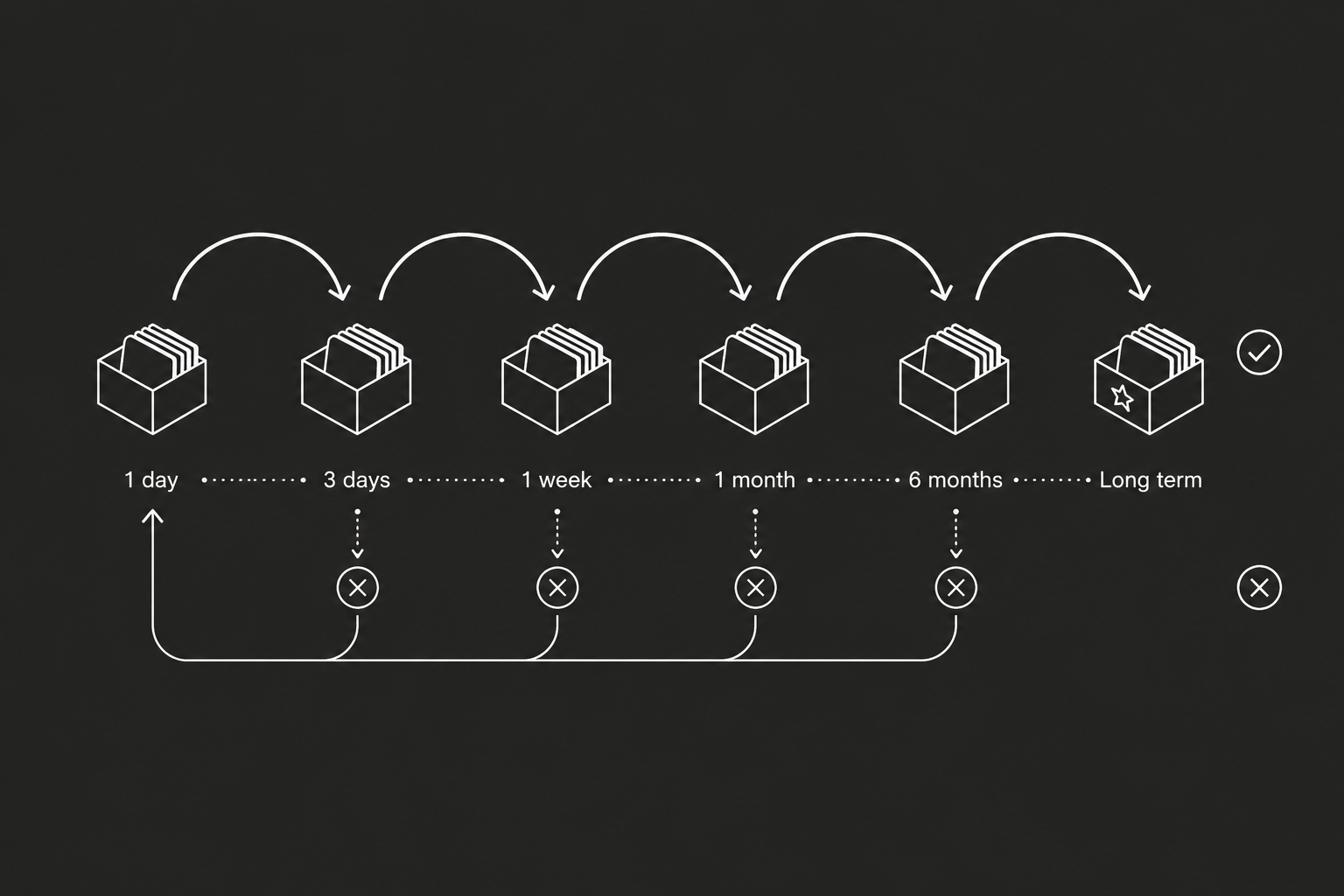
The deeper value of spaced repetition is not just organization. It is consistency. When review is visible and scheduled, memory work becomes part of your normal study rhythm instead of something you remember only when exams get close. That is when spaced repetition becomes powerful: you stop revising in bursts and start strengthening recall week after week.
This is especially useful for students who struggle with the illusion of competence. Reading notes can feel productive even when recall is weak. Spaced repetition pushes you toward repeated contact with the material over time, which is much closer to what real remembering requires. It rewards retrieval, reinforcement, and patience instead of last-minute intensity.
Why this method is better than rereading or random revision
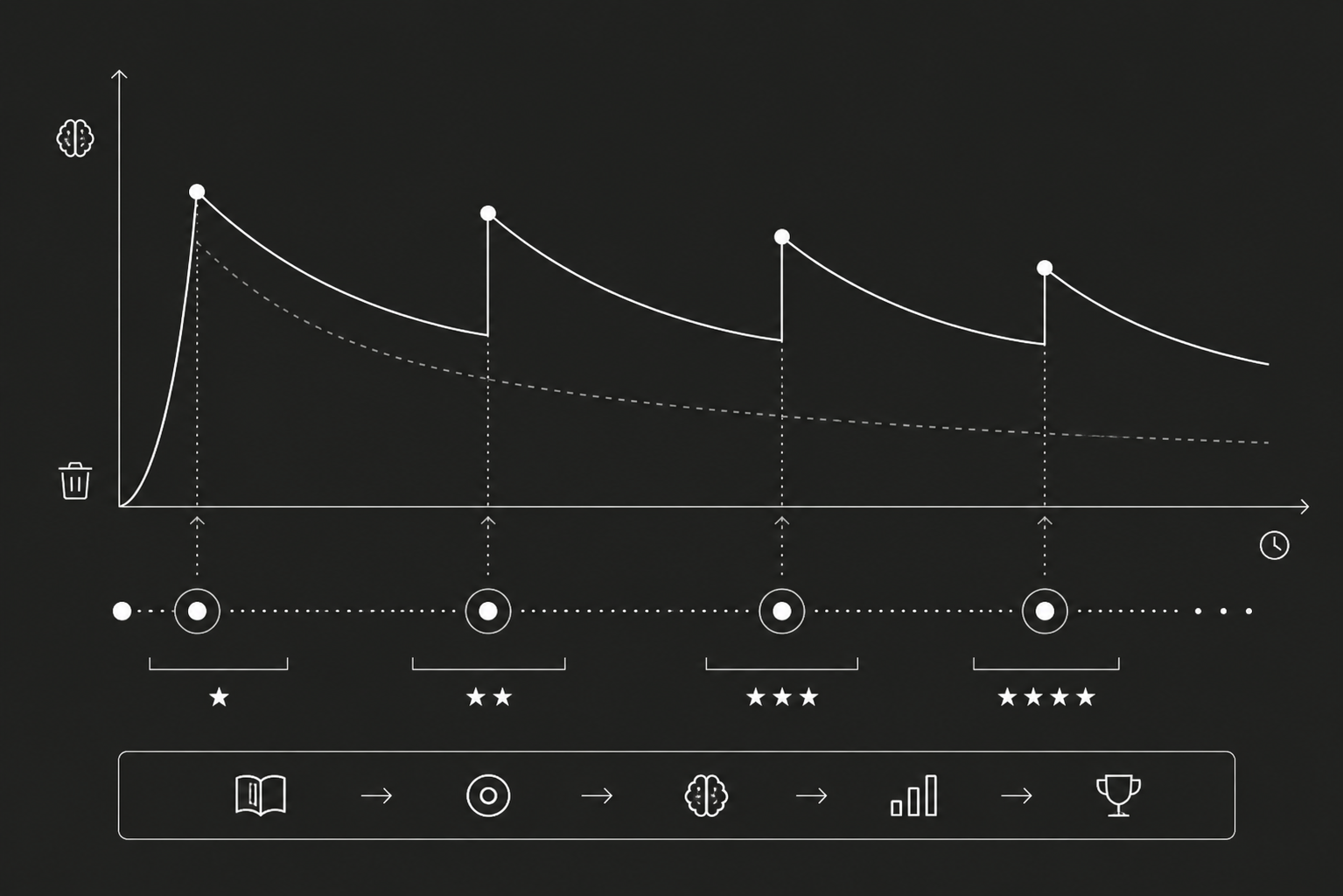
Many students spend a lot of time around their material without actually improving recall. They reread highlights, skim old notes, or sit through long review blocks that feel busy but fade quickly. Spaced repetition works better because it accepts a basic truth about memory: forgetting is normal, but timing review well can interrupt that forgetting curve before the information disappears.
That is why spaced repetition is so closely connected to effective exam preparation, active recall, and high-retention learning. It encourages a cycle where information is challenged, recovered, reinforced, and then revisited again after a longer gap. Over time, retrieval gets less fragile. What felt hard and uncertain starts becoming accessible under pressure, which is exactly what most students want in real tests, oral exams, essays, and problem-solving situations.
- It reduces wasted time on material you already know well enough for now.
- It brings weak or aging topics back into view before they vanish completely.
- It supports long-term retention, not just short-term performance.
- It makes large syllabi feel more manageable because review becomes staged.
How to use spaced repetition inside a real study routine
The best way to use spaced repetition is alongside focused study sessions, not instead of them. Learn new material first. Then use spaced repetition to keep it alive. That pairing matters. Deep study helps you understand an idea in the beginning, while spaced repetition prevents that understanding from decaying over the next days and weeks.
A practical workflow looks like this: study a topic, summarize or retrieve the core ideas, then return later for structured review. If recall feels easy, the next review can wait longer. If recall feels weak, the topic should come back sooner. Over time, that rhythm creates a more stable memory base and makes revision before tests far less chaotic.
For daily studying
Use spaced repetition after classes or independent study blocks to stop small gaps from turning into full re-learning later.
For exam season
Use it to cycle through old topics in a deliberate order so revision stays broad, current, and less panic-driven.
For memory-heavy subjects
It is especially effective for medicine, languages, law, anatomy, definitions, formulas, and fact-dense modules.
For consistency
It gives your study week structure by making review visible, which lowers friction and makes it easier to return tomorrow.
What students usually notice when they stay with it
When students use spaced repetition consistently, the first change is usually emotional before it is numerical: they feel less lost. Topics stop blending together. Old chapters stop feeling completely gone. Revision becomes a shorter, more focused act because the material has been touched at the right intervals instead of abandoned and rediscovered from scratch.
The second change is confidence. Not fake confidence from recognition, but real confidence from retrieval. You start seeing the difference between “this looks familiar” and “I can actually bring this back when I need it.” That difference matters in every situation where performance depends on recall under pressure.
The third change is efficiency. You do not need to over-study everything equally. Strong material can breathe. Weak material returns sooner. Your revision becomes uneven in the best possible way: more attention goes where memory is fragile, and less goes where it is already stable.