
If you have ever spent hours passively rereading your textbook only to blank out during the actual exam, you are not alone. It's a common trap known as the "illusion of competence." You feel like you know the material, but your brain hasn't actually retained it. Enter the Blurting Method—a highly effective active recall technique that is taking the studying world by storm.
Whether you're studying for your high school finals, medical school exams, or university essays, the blurting technique is guaranteed to show hidden knowledge gaps and skyrocket your memory retention.
What is the Blurting Method?
The Blurting Method (also sometimes called a "brain dump" or "knowledge vomit") is a straightforward yet incredibly impactful active recall exercise. The concept is simple: you read over your notes or a section of a textbook, close the book, and then literally "blurt" out (write down or type) absolutely everything you can remember about that topic onto a blank piece of paper.
By forcing your brain to retrieve the information without any external cues or helpful prompts, you reinforce the neural pathways associated with that memory. It forces you to confront exactly what you know and—more importantly—what you don't know.
The Science Behind Blurting and Active Recall
Why does reading the textbook 10 times yield worse results than blurting just once? The answer lies in cognitive psychology. Passive studying tasks like highlighting, rereading, and summarizing are low-effort for the brain. They create a false sense of fluency.
Active recall, which is the foundation of the blurting method, demands high cognitive effort. By actively searching your memory for the answer, you are strengthening the neural connections to that specific piece of information. This process is proven to significantly reduce the rate at which you forget things, famously mapped out by the Ebbinghaus Forgetting Curve.
How to Do the Blurting Method Step-by-Step
Ready to upgrade your study sessions? Follow this comprehensive step-by-step guide to executing the blurting method flawlessly:
Step 1: Organize Your Material
Choose a specific topic or chapter. Don't try to blurt an entire semester's worth of content at once. Break it down. For example, instead of blurting "World War II," focus on "Causes of World War II: 1919-1939."
Step 2: The Brief Review (Optional)
If this is your first time reviewing the material, take 10-15 minutes to read through your notes or textbook. Pay attention to key dates, formulas, definitions, and overarching concepts. If you already feel confident, skip this step and go straight into the blurt.
Step 3: Close the Book and Blurt
Close your laptop, shut your textbook, and put away your notes. Take a blank sheet of paper (or use an online tool like Stuon's Blurting Tool) and write down everything you remember.
- Don't worry about neatness or handwriting.
- Use mind maps, bullet points, or rough sketches.
- Connect ideas and draw arrows between related concepts.
- Keep going until you absolutely cannot remember another detail.
Step 4: The Crucial Step - Correction (The Red Pen Phase)
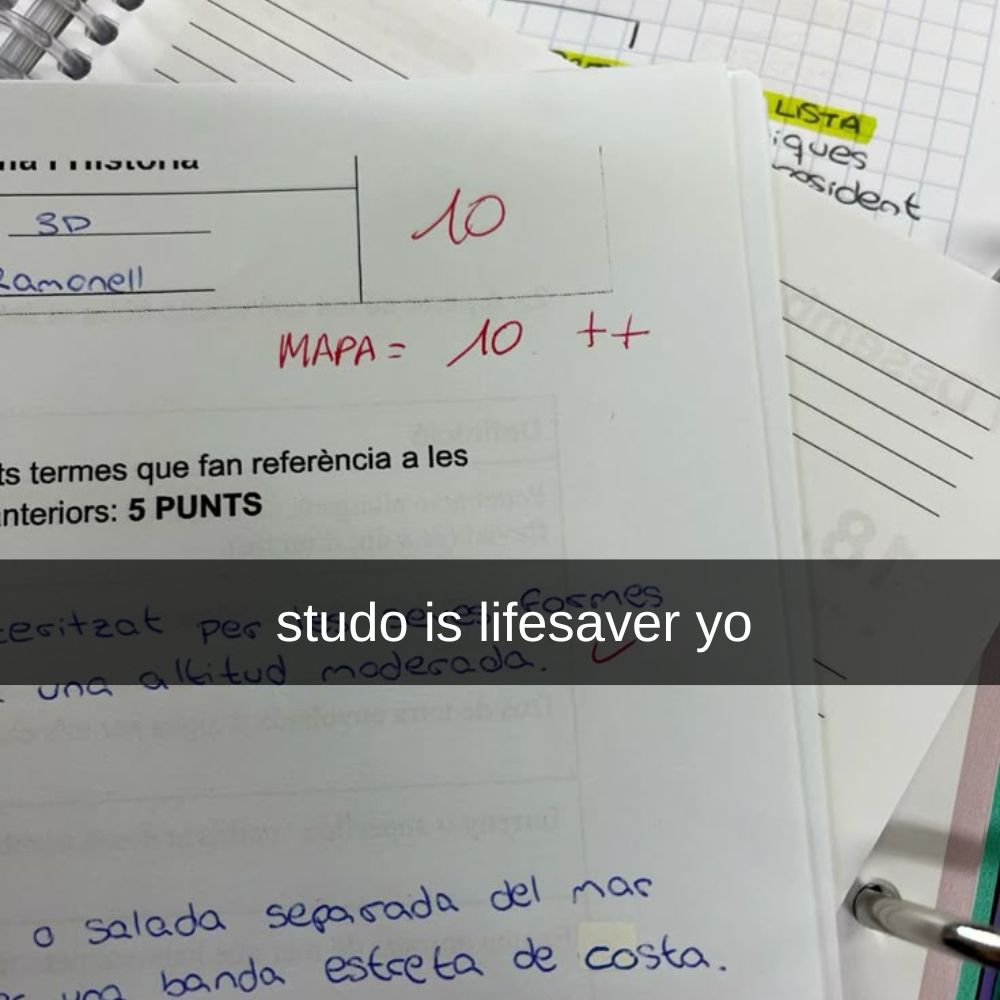
This is where the magic happens. Once you are completely out of ideas, open your textbook or notes again. Grab a dramatically different colored pen (like bright red or green). Compare your blurt to the actual material.
Add in everything you missed, correct any mistakes you made, and clarify any vague points using the red pen. This creates a visual representation of your knowledge gaps. The red ink highlights exactly what your brain failed to retrieve.
Step 5: Repeat and Refine
Take a break, perhaps using a Pomodoro timer, and study the red ink intensely. A day or two later, repeat the process on the same topic. You will notice the amount of red ink drastically decreasing over time as your active recall strengthens.
Tips for Maximizing the Blurting Technique
- Combine with Spaced Repetition: Don't blurt right after reading. The struggle of forgetting is part of the learning process. Blurt a topic a day after you learn it, then 3 days later, then a week later.
- Use Digital Tracking: If your hand cramps up easily, typing your blurts is entirely valid. Tools like Stuon allow you to set timers and track your word count to gamify the process.
- Speak it Aloud: If you are an auditory learner, record yourself blurting out the information verbally. Listen back and correct yourself.
Ready to try it yourself?
Stop wasting time with passive studying. Use our free, distraction-free Blurting Method Tool to start actively recalling your knowledge today.
Try Stuon's Free Blurting Tool